Ozempic Side Effects in Men: Testosterone, Muscle, ED

Most of what's written about Ozempic side effects draws on a population that runs about two-thirds women, because that's who fills most of the prescriptions. The gastrointestinal effects (nausea, constipation, diarrhea, reflux) hit men and women the same way and for the same reason: GLP-1 receptors slow gastric emptying, and the gut protests until it adapts. Those are covered in the full side effect timeline. This guide covers Ozempic side effects in males that the timeline does not: what happens to muscle, to testosterone, and to erections.
None of this argues for or against the drug. It's the information a man needs to use it well: what to watch for, what to expect, and when a symptom is worth a call. Most of it is manageable. One part is genuinely good news, and one part is a real, underreported signal that deserves more honesty than it usually gets.
Quick reference: Ozempic side effects in men
Gut effects match women. The three male differences are muscle loss, testosterone, and erections.
STEP-1 DEXA: lean mass fell 9.7% over 68 weeks, while the lean share of total mass rose.
One database signal for new ED or a PDE5 script is 1.47% versus 0.32% in matched men.

Ozempic side effects in males: the shared baseline
Nausea, diarrhea, constipation, and reflux are the most common Ozempic side effects in men and women alike. They cluster in the first weeks after each dose increase and fade as the gut adapts. The pattern tracks dose escalation so closely that the same weeks also answer how long does it take for semaglutide to suppress appetite, usually the first week, and when a man will feel rough versus when it will settle. For the receptor story behind that appetite drop, start with how does ozempic work. Our guide to Wegovy side effects has the label numbers for the same molecule at its weight-loss dose.
Fatigue is the one men consistently misattribute. "Can Ozempic make you tired?" is among the most-searched questions about the drug, and the answer is yes, but the cause is almost always the calorie deficit, not the molecule. Eat far less and energy availability drops with it. Men who train or work on their feet notice first. The fix is rarely stopping the drug. It is eating enough protein and enough total food to support the work you're doing, which points straight at the effect men underrate most.
Muscle loss: the effect to take seriously
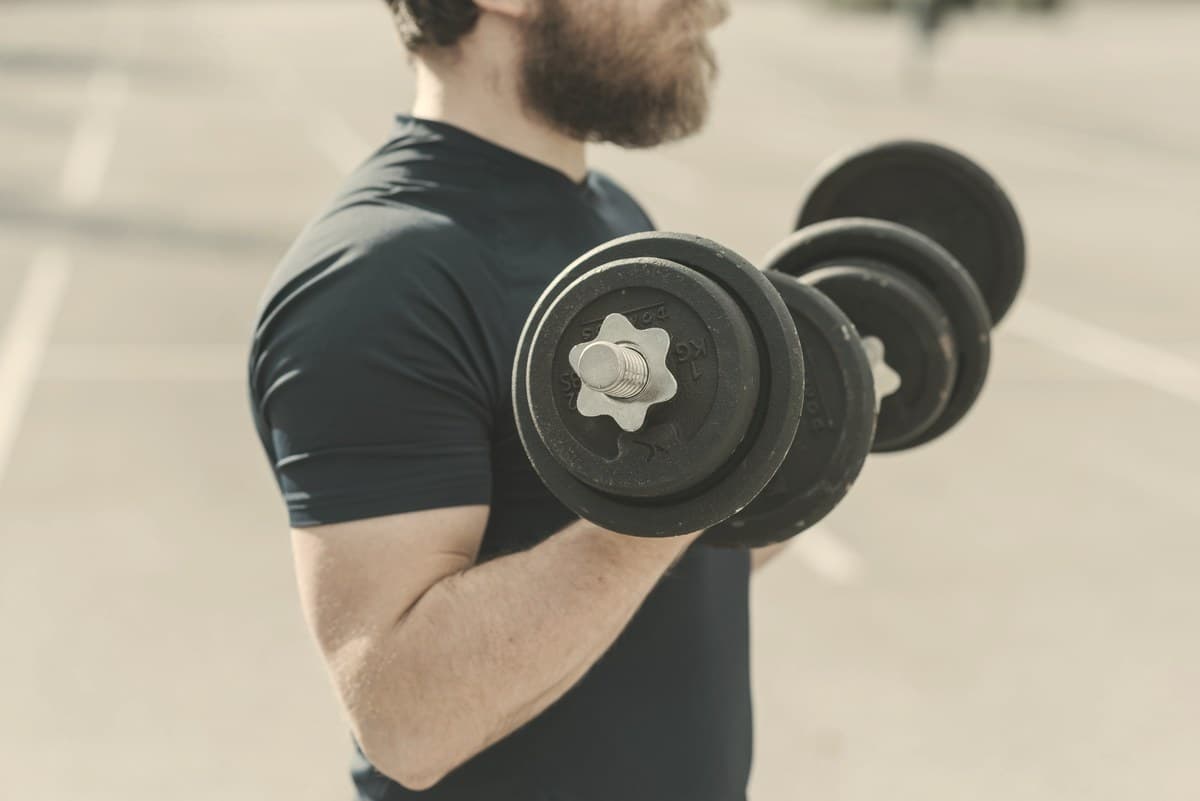
Lose weight fast and some of what comes off is muscle, not fat. In the STEP-1 DEXA substudy of semaglutide 2.4 mg, total lean body mass fell 9.7% over 68 weeks, while the share of lean mass relative to total mass rose. A later review of lean-mass data is split on how much that drop matters. The ratio of lean to total mass can still improve, and fat loss dominates, but the absolute lean-mass loss is real. Men have both more muscle to lose and more reason to protect it.
The reason to care isn't aesthetic. Lean mass is the primary driver of resting metabolism. Lose a chunk of it and the body that remains burns fewer calories at rest, which is one of the engines behind weight regain after stopping. A smaller metabolic engine makes regained weight easier to put on and harder to take back off.
Muscle loss is also the most preventable thing on this list, and the prevention isn't pharmacological. Resistance training two to four times a week, plus protein in the 1.2 to 1.6 grams per kilogram range that adult protein-target reviews treat as a research guideline, is what those papers associate with holding muscle through a deficit. That range is a cited target from Phillips, Chevalier, and Leidy, not a personal prescription and not dosing advice. Hitting it is hardest precisely when appetite is gone, which is the point. For a man on Ozempic, the lifting and the protein aren't add-ons. They are the line between losing fat and losing fitness. Escalating the dose slowly, the way the tirzepatide dosing guide lays out the titration logic, slows the pace of weight loss and with it the rate of muscle loss.
Testosterone: usually the good news
This is the part that surprises people. Obesity lowers testosterone through a specific mechanism: fat tissue converts testosterone to estrogen via the aromatase enzyme, and the resulting signal suppresses the brain's output of luteinizing hormone, the hormone that tells the testes to make testosterone. The result is functional hypogonadism, low testosterone caused by the excess weight itself rather than by anything wrong with the testes.
Because the weight is the cause, losing it reverses the problem. In a randomized trial of obese men with functional hypogonadism, the GLP-1 drug liraglutide raised total testosterone and, unlike testosterone replacement therapy, increased luteinizing hormone and FSH, switching the body's own production back on instead of supplying hormone from outside. The men on the GLP-1 lost about 7.9 kg; the testosterone-gel group lost almost nothing, according to the Jensterle liraglutide trial. Other work in diabetic men found that weight loss did more for testosterone than glycemic control did. So the rising energy and libido a lot of men report over the months of weight loss aren't a coincidence. They're the expected result.
There's a fertility angle worth knowing. Testosterone replacement shuts down sperm production; GLP-1 weight loss doesn't, and tends to improve it. In obese men with type 2 diabetes and functional hypogonadism, semaglutide improved sperm morphology and testosterone together. For a man choosing between replacement therapy and weight loss while trying to conceive, that is the whole decision, and it's the male mirror of the fertility story on the women's side.
Ozempic and ED: the honest version

Here the reassuring story and the data don't fully line up. Mechanistically, erections should improve on Ozempic. They're vascular, and weight loss improves both blood-vessel function and testosterone. For a lot of men, that is exactly what happens.
But a large database study cuts the other way. Among more than 3,000 non-diabetic obese men prescribed semaglutide for weight loss, the rate of new erectile dysfunction or a PDE5-inhibitor prescription was higher than in matched men who never took it: 1.47% versus 0.32%, a relative risk around 4.5, in a TriNetX analysis. The absolute difference is small, and a database study can't prove the drug caused it. Rapid weight loss, fatigue, and the strain of a major body change are all plausible. But the signal is real enough that erectile changes on Ozempic are worth a conversation with the prescriber, not a quiet wait-and-see.
Facial and visible changes
Rapid fat loss shows up in the face, and men aren't spared. The hollowing people call "Ozempic face" comes from the loss of the fat pads that hold facial volume, the same mechanism in men as in women, read first as a sharper jawline and later, if the weight loss is aggressive, as gauntness. The biology doesn't care about sex, and the full explanation of why facial volume disappears covers it. Hair shedding from rapid weight loss can hit men too, through the temporary mechanism described in the GLP-1 hair loss guide, though men report it far less than women.
How a man should run this
The male playbook comes down to a few moves. Protect muscle on purpose, because nothing else will do it for you. Expect testosterone, energy, and libido to climb as the weight comes off. That is the reversal of obesity-driven hypogonadism, not a drug effect to chase. Treat new erectile trouble as a flag worth raising, not a contradiction to ignore. And get baseline and follow-up bloodwork, a metabolic panel, and a morning testosterone level if symptoms call for it, so the changes are measured instead of guessed at. Run it that way and the male side-effect profile turns into a set of things to manage rather than a list to fear.
Frequently asked questions
Does Ozempic lower testosterone in men?
For most men with obesity it does the opposite. Excess fat suppresses testosterone by converting it to estrogen and dampening the brain's hormonal signal, a state called functional hypogonadism. Because the weight is the cause, losing it tends to raise testosterone. A randomized trial of the GLP-1 drug liraglutide found total testosterone rose along with the brain's luteinizing hormone signal, restoring the body's own production. Energy and libido often improve over the months of weight loss for the same reason. That trial is not a promise for every man, and a new drop in energy or libido is still worth a morning testosterone check with the prescriber rather than an assumption that the drug is to blame.
Why am I so tired on Ozempic?
Fatigue on Ozempic is common, and it usually comes from the calorie deficit rather than the drug itself. When appetite suppression cuts your food intake sharply, energy availability falls with it, and men who train or do physical work feel it first. Eating enough protein and enough total food, even when you are not hungry, resolves most of it. Fatigue that is severe, sudden, or paired with dizziness or dehydration is worth raising with your prescriber, since those can signal that intake has dropped too far. This is a reason to review food intake and hydration, not a reason to invent a new diagnosis from a search result.
Can Ozempic cause erectile dysfunction?
It may, in a small share of men. In a TriNetX database study of 3,094 non-diabetic obese men, 1.47% developed new erectile dysfunction or got a PDE5-inhibitor prescription after starting semaglutide, versus 0.32% in matched men who never took it. Weight loss generally improves erectile function through better blood-vessel health and higher testosterone, and many men improve. The absolute risk in the database study is small and it cannot prove cause, with rapid weight loss and fatigue as plausible contributors. If you notice changes, treat it as a reason to talk to your prescriber rather than something to ride out. The same conversation should cover sleep, blood pressure, and alcohol, because those drive erections independently of the shot.
Will I lose muscle on Ozempic?
Some of the weight lost on any rapid weight-loss regimen is lean tissue, and semaglutide is no exception. STEP-1 DEXA scans showed a 9.7% drop in total lean body mass alongside a larger fat loss, while the lean share of total mass still rose. Men have more muscle to lose and more metabolic reason to keep it. Resistance training two to four times a week and protein around the 1.2 to 1.6 grams per kilogram guideline cited in adult protein-target reviews are what those papers associate with muscle preservation through a deficit. That is a cited range, not a personal meal plan. Slower dose escalation reduces the pace of loss. Protecting muscle is the single most important thing a man can do on this drug.