Ozempic® providers &
prescriptions in Oshkosh, WI

Ozempic is FDA-approved for type 2 diabetes, not for weight management.[1] The semaglutide approved for chronic weight management is Wegovy in Oshkosh.
Physicians near Oshkosh, WI from the federal NPI registry. Ask each office whether it prescribes Ozempic.[9]
Same molecule (semaglutide): Wegovy in Oshkosh, Semaglutide in Oshkosh
Other GLP-1 medicines: Tirzepatide in Oshkosh, Mounjaro in Oshkosh, Zepbound in Oshkosh
Find an Ozempic provider in Oshkosh.
Every entry comes from the federal NPI registry. Ask each office what it prescribes. We do not accept payment for placement.
How to get Ozempic in Oshkosh.
19 GLP-1 prescribers and 6 local resource types are on record for Oshkosh, plus 3 nearby towns in the directory.
Medicaid status above is for weight-loss use and was compiled April 2026 from KFF and public Medicaid trackers; only 13 states cover it and several are mid-change, so confirm Wisconsin’s current Medicaid and plan rules before booking. GLPHelper provides information and provider matching, not medical or coverage advice.
An injectable medication for adults with type 2 diabetes, and, by indirect effect, for body weight.
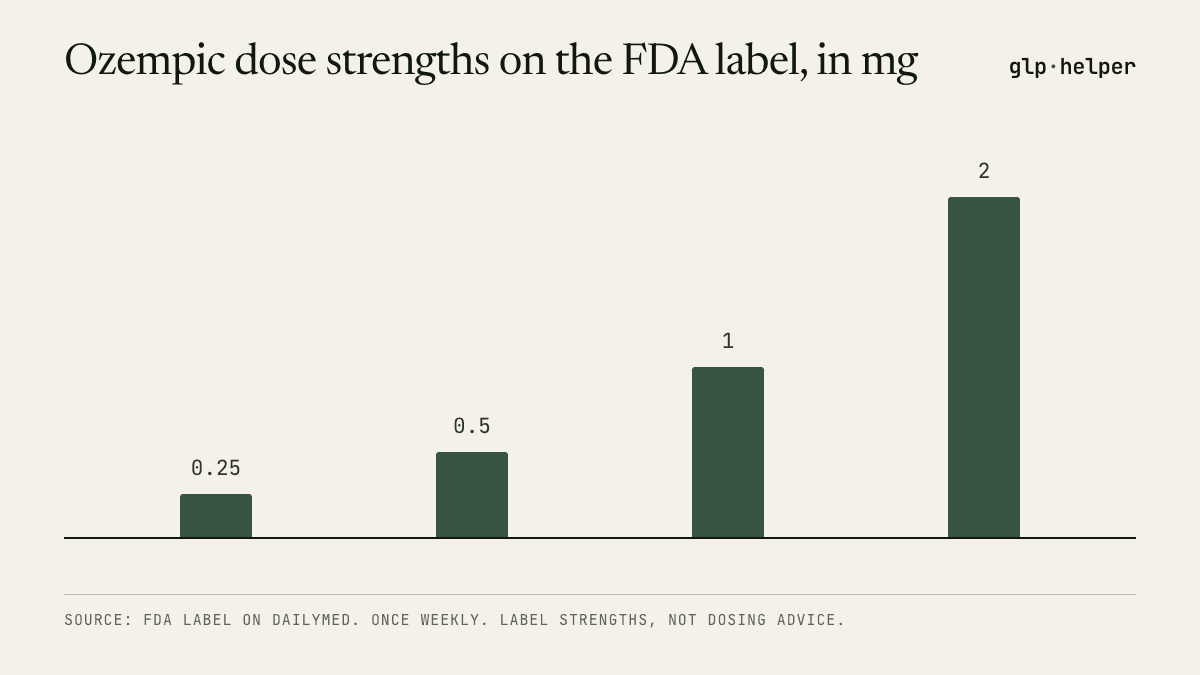
Ozempic is the brand name for semaglutide, a once-weekly subcutaneous injection in the GLP-1 receptor agonist class. It mimics a gut hormone that signals satiety to the brain and slows gastric emptying. In the trials on its FDA label, the 1 mg dose lowered HbA1c by 1.4 to 1.9 percentage points and body weight by a mean of 4.7 to 6.0 kg over 30 to 56 weeks. The 2 mg dose lowered body weight by a mean of 6.4 kg over 40 weeks.[2][3]
It is FDA-approved for glycemic control in adults with type 2 diabetes mellitus and for reducing the risk of major cardiovascular events in adults with T2D and established cardiovascular disease. The same molecule, marketed by the same manufacturer as Wegovy, is the FDA-approved formulation for chronic weight management.[1]
For the receptor story in plain English, read how does ozempic work.
Rapid weight loss can change the midface. The mechanism people call ozempic face is in the research notes.
Community health · CDC
Weight & metabolic health in Oshkosh
Oshkosh, Wisconsin has a population of 66,816 people. The adult obesity rate in Oshkosh is an age-adjusted estimate of 42.2%, 4.8 percentage points above the Wisconsin state rate of 37.4%. Diagnosed diabetes reaches 10.6% of adults in Oshkosh. Inactivity, meaning no leisure-time physical activity reported in the past month, affects 29.4% of adults in Oshkosh.
- of Oshkosh adults have obesity
- 42.2%
- diagnosed diabetes
- 10.6%
- no regular physical activity
- 29.4%
Age-adjusted estimates for Oshkosh, community figures, not individual risk. CDC PLACES, 2025 release.
The prescription is one part. Here is the rest, in Oshkosh.
Trials of semaglutide paired the drug with diet counseling and regular activity. Every name below is a real listing near Oshkosh, WI, ordered as the registry lists them, never by who pays us.
Fitness clubs and recreation centers
Fitness clubs and recreation centers run classes and pools, an easier start than a weight room.
Registered dietitians
A registered dietitian builds the food plan around your prescription. Call to ask about GLP-1 nutrition plans and insurance.
What the trials actually showed.
We summarize results from the SUSTAIN program, the seven Phase III randomized trials Novo Nordisk submitted to the FDA, and the SUSTAIN-6 cardiovascular outcomes trial. Numbers below are means at the 30-week endpoint, 1 mg weekly dose.
Most Ozempic side effects are stomach and gut effects.
In Ozempic's diabetes trials at 0.5 mg and 1 mg, the most common side effects were nausea (15.8 to 20.3%), diarrhea (8.5 to 8.8%), and vomiting (5 to 9.2%). Most reports came during dose escalation.[1] Serious events were rare but include pancreatitis, gallbladder disease, and an FDA boxed warning regarding thyroid C-cell tumors based on rodent data.[1]
What Ozempic costs, by how you pay.
The price you pay depends on your insurance plan, your diagnosis, and how you buy. Manufacturer self-pay programs cost far less than pharmacy retail. Here are the ranges.
Data sources: GoodRx national retail survey[6], CMS Part D formulary files[5], Novo Nordisk self-pay and savings pages.
Self-pay and savings card prices checked . Retail averages from May 2026.
| Pharmacy retail (no insurance) | $1,476 | per month | Brand-name retail average, May 2026[6] |
|---|---|---|---|
| NovoCare self-pay, pen | $349 to $499 | per month | 0.25, 0.5, and 1 mg $349. 2 mg $499 |
| Commercial insurance (covered) | $25 to $250 | per month copay | Varies by PBM; T2D indication usually covered |
| Weight management | Not approved | Ozempic is not FDA-approved for weight management. Wegovy is. | |
| Medicare Part D | $0 to $100 | per month | T2D covered; weight loss not covered by law[5] |
| Manufacturer savings card | as low as $25 | per month | Commercial only; eligibility limits apply |
Physicians from the federal NPI registry. Ask each office whether it prescribes Ozempic.
Physicians from the federal NPI registry in the states we cover. Ask each office whether it prescribes Ozempic.
The questions people ask before they book.
Answers reviewed by the glp·helper Medical Team. Citations link to primary sources, never marketing copy.
Yes. Ozempic is a prescription-only medicine, marked Rx only on its label. A licensed prescriber (MD, DO, NP, or PA) must evaluate you before issuing a prescription.[1]
Ozempic is FDA-approved for type 2 diabetes, not for weight management. Its label reports weight loss in diabetes trials: 5.6 kg on 1 mg and 6.4 kg on 2 mg over 40 weeks. Wegovy is the semaglutide approved for chronic weight management. Using Ozempic for weight loss alone is off-label, and that call belongs to a prescriber.[1]
Only with a prescription. A licensed prescriber must write it, and a telehealth prescriber must be licensed in your state. A state-licensed pharmacy fills it. The FDA warns that unapproved semaglutide sold online has not had its review for safety, effectiveness, or quality.[8]
Coverage depends on your indication and plan. For Type 2 diabetes, most commercial plans cover Ozempic with prior authorization. For weight loss alone, most plans deny coverage. Wegovy is the on-label option but is similarly restricted. Medicaid generally covers Ozempic for T2D. Medicare Part D covers it for T2D only, and weight-loss indications are not covered by law.[5]
Yes in most states. Telehealth prescribing of GLP-1s is permitted after an established practitioner-patient relationship, which can be established via synchronous video visit in most state medical boards' rules. The provider must be licensed in your state.[7]
The FDA says unapproved versions do not undergo its review for safety, effectiveness and quality before they are marketed. It also says semaglutide sodium and semaglutide acetate are different active ingredients than are used in the approved drugs. The FDA advises patients to get a prescription from their doctor and fill it at a state-licensed pharmacy.[8]
Glucose effects are typically observable within 1 to 2 weeks. Weight effects accrue over 12 to 20 weeks as the dose is escalated. Most patients reach their maintenance dose (1 mg or 2 mg weekly) after 8 to 16 weeks of titration.[1]
Same molecule (semaglutide), different FDA-approved indication and maximum dose. Ozempic is approved for T2D at doses up to 2 mg/week. Wegovy is approved for chronic weight management at doses up to 7.2 mg/week (Wegovy HD). Insurance treats them as separate drugs.[10]