Tirzepatide
(Mounjaro, Zepbound) in North Charleston, SC

Physicians near North Charleston, SC from the federal NPI registry. Ask each office whether it prescribes Mounjaro or Zepbound.[9]
- Mounjaro: FDA-approved for type 2 diabetes.
- Zepbound: FDA-approved for chronic weight management, and obstructive sleep apnea with obesity.
Same molecule (tirzepatide): Mounjaro in North Charleston, Zepbound in North Charleston
Other GLP-1 medicines: Ozempic in North Charleston, Wegovy in North Charleston, Semaglutide in North Charleston
Find a physician in North Charleston.
Every entry comes from the federal NPI registry. Ask each office what it prescribes. We do not accept payment for placement.
How to get Tirzepatide in North Charleston.
28 GLP-1 prescribers and 4 local resource types are on record for North Charleston, plus 3 nearby towns in the directory.
Medicaid status above is for weight-loss use and was compiled April 2026 from KFF and public Medicaid trackers; only 13 states cover it and several are mid-change, so confirm South Carolina’s current Medicaid and plan rules before booking. GLPHelper provides information and provider matching, not medical or coverage advice.
The molecule in Mounjaro and Zepbound. It acts on two gut-hormone pathways, GIP and GLP-1.
Tirzepatide is a once-weekly injection sold by Eli Lilly as Mounjaro (for type 2 diabetes) and Zepbound (for chronic weight management). It is the first approved dual GIP/GLP-1 receptor agonist. It activates two gut-hormone pathways rather than one, which is associated with greater average weight loss than single GLP-1 agonists.[2][3]
In SURMOUNT-1, adults with obesity (without diabetes) lost a mean of 20.9% of body weight on the 15 mg dose at 72 weeks, versus 3.1% on placebo. In the SURPASS-2 head-to-head diabetes trial, tirzepatide produced larger HbA1c and weight reductions than semaglutide 1 mg.[1]
Community health · CDC
Weight & metabolic health in North Charleston
North Charleston, South Carolina has a population of 114,852 people. The adult obesity rate in North Charleston is an age-adjusted estimate of 35.6%, 1 percentage points above the South Carolina state rate of 34.6%. Diagnosed diabetes reaches 13.7% of adults in North Charleston. Inactivity, meaning no leisure-time physical activity reported in the past month, affects 27.4% of adults in North Charleston.
- of North Charleston adults have obesity
- 35.6%
- diagnosed diabetes
- 13.7%
- no regular physical activity
- 27.4%
Age-adjusted estimates for North Charleston, community figures, not individual risk. CDC PLACES, 2025 release.
The prescription is one part. Here is the rest, in North Charleston.
Trials of tirzepatide paired the drug with diet counseling and regular activity. Every name below is a real listing near North Charleston, SC, ordered as the registry lists them, never by who pays us.
Personal trainers and strength coaches
A trainer builds the strength routine that protects muscle during fast weight loss.
Yoga studios
Yoga and meditation studios help with mobility, sleep, and the stress that drives eating. Clubs are free, regular movement.
What the trials actually showed.
We summarize the SURMOUNT weight-management program and the SURPASS diabetes program, including the SURPASS-2 head-to-head against semaglutide. Figures are means at each trial's primary endpoint.
Most Tirzepatide side effects are stomach and gut effects.
In Zepbound's weight trials at 5 to 15 mg, the most common side effects were nausea (25 to 29%), diarrhea (19 to 23%), constipation (11 to 17%), and vomiting (8 to 13%). Mounjaro's diabetes trials showed lower rates at the same doses.[1] Serious events were rare but include pancreatitis, gallbladder disease, and an FDA boxed warning regarding thyroid C-cell tumors based on rodent data.[1]
What Tirzepatide costs, by how you pay.
The price you pay depends on your insurance plan, your diagnosis, and how you buy. Manufacturer self-pay programs cost far less than pharmacy retail. Here are the ranges.
Data sources: GoodRx national retail survey[6], CMS Part D formulary files[5], Eli Lilly self-pay and savings pages.
Self-pay and savings card prices checked . Retail averages from May 2026.
| Zepbound, pharmacy retail | $1,000 to $1,300 | per month | Brand-name retail average, May 2026[6] |
|---|---|---|---|
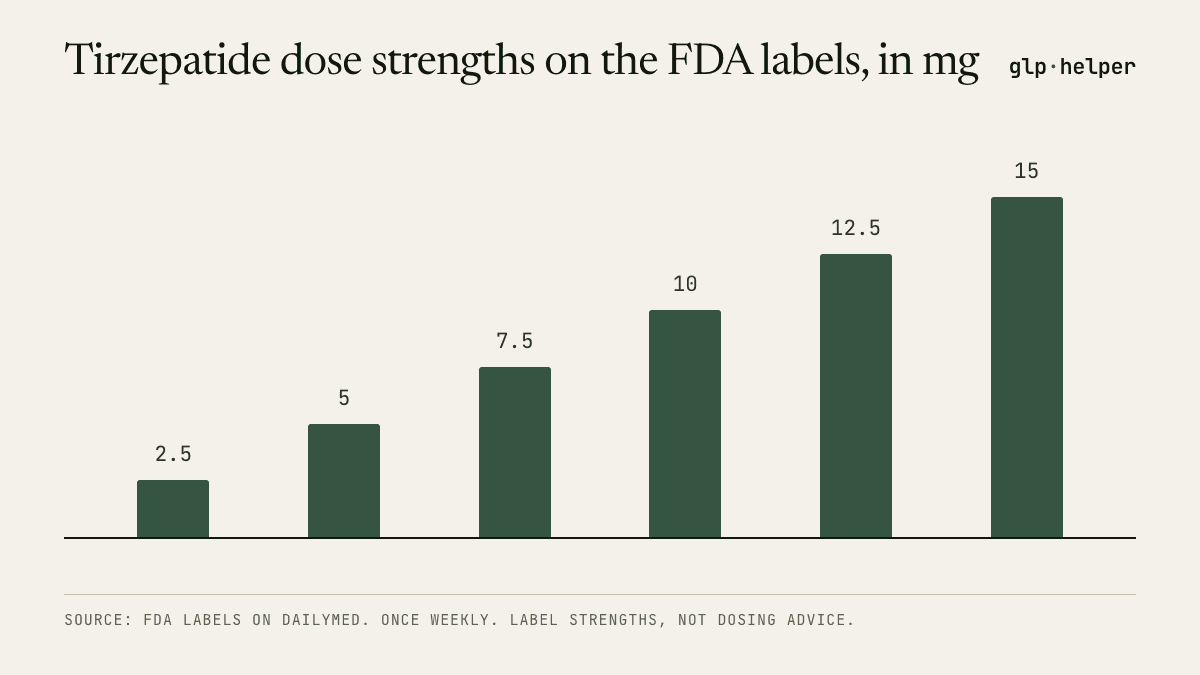
| Zepbound, LillyDirect self-pay | $299 to $699 | per month | KwikPen by dose: 2.5 mg $299, 5 mg $399, 7.5 mg $499, 10 to 15 mg $699. The $449 offer on 7.5 to 15 mg applies to the first purchase and to refills within 45 days. Vials start at $299 |
| Mounjaro, pharmacy retail | $1,000 to $1,200 | per month | Brand-name retail average, May 2026[6] |
| Commercial insurance (T2D) | $25 to $250 | per month copay | Usually covered for diabetes with prior authorization |
| Commercial insurance (weight) | Often denied | Zepbound is on-label but frequently requires PA | |
| Medicare Part D | $0 to $100 | per month | Type 2 diabetes covered. Zepbound KwikPen for weight management is $50 a month through the Medicare GLP-1 Bridge, Jul 2026 to Dec 2027[5] |
| Manufacturer savings card | as low as $25 | per month | Commercial insurance only; eligibility limits apply |
Physicians from the federal NPI registry. Ask each office whether it prescribes Tirzepatide.
Physicians from the federal NPI registry in the states we cover. Ask each office whether it prescribes Tirzepatide.
The questions people ask before they book.
Answers reviewed by the glp·helper Medical Team. Citations link to primary sources, never marketing copy.
Tirzepatide is the active ingredient in two Eli Lilly brands: Mounjaro and Zepbound. No generic tirzepatide is FDA-approved in the US. Mounjaro is approved for type 2 diabetes; Zepbound is approved for chronic weight management. They share an active ingredient but carry different approved indications, and insurers treat them as separate products.[1]
In the SURPASS-2 head-to-head diabetes trial, tirzepatide produced greater HbA1c reductions and greater weight loss than semaglutide 1 mg across all doses. Tirzepatide also showed higher average weight loss in its obesity trials (up to ~20.9%), though the two have not been compared head-to-head for weight loss at their maximum weight-management doses.[3]
Yes. Tirzepatide is a prescription-only medicine. The Mounjaro and Zepbound labels both say Rx only. A licensed prescriber (MD, DO, NP, or PA) must evaluate you before issuing a prescription.[1]
In most states, yes. Telehealth prescribing is permitted once a practitioner-patient relationship is established, typically via a synchronous video visit, by a provider licensed in your state.[1]
Glucose effects appear within the first weeks. Weight effects accrue over several months as the dose is escalated from 2.5 mg toward maintenance; trials measured peak effects at 72 weeks.[2]