Zepbound® providers &
prescriptions in Virginia

Physicians across Virginia from the federal NPI registry. Ask each office whether it prescribes Zepbound.[9]
Same molecule (tirzepatide): Tirzepatide in Virginia, Mounjaro in Virginia
Other GLP-1 medicines: Ozempic in Virginia, Wegovy in Virginia, Semaglutide in Virginia
Find a Zepbound provider in Virginia.
Every entry comes from the federal NPI registry. Ask each office what it prescribes. We do not accept payment for placement.
The list above samples the largest towns. Each town page below lists every physician there, 838 across Virginia.
How a prescription works in Virginia.
You don’t have to leave Virginia to start. Because tirzepatide isn't a controlled substance, a Virginia-licensed prescriber can evaluate you by telehealth and send the script to a pharmacy near you, or you can see one of the 838 local providers below in person. What you pay depends on your plan, not your zip code.
Medicaid status above is for weight-loss use and was compiled April 2026 from KFF and public Medicaid trackers; only 13 states cover it and several are mid-change, so confirm Virginia’s current Medicaid and plan rules before booking. GLPHelper provides information and provider matching, not medical or coverage advice.
An injectable medication for chronic weight management in adults. Same molecule as Mounjaro.
Zepbound is the brand name Eli Lilly uses for tirzepatide approved for chronic weight management. It is a once-weekly subcutaneous injection and the first approved dual GIP/GLP-1 receptor agonist. The identical molecule, marketed as Mounjaro, is the FDA-approved formulation for type 2 diabetes.[2][3]
In SURMOUNT-1, adults with obesity (without diabetes) lost a mean of 20.9% of body weight on the 15 mg dose at 72 weeks, versus 3.1% with placebo. That is among the largest average weight reductions reported for an anti-obesity medication. Zepbound is approved as an adjunct to a reduced-calorie diet and increased physical activity.[1]
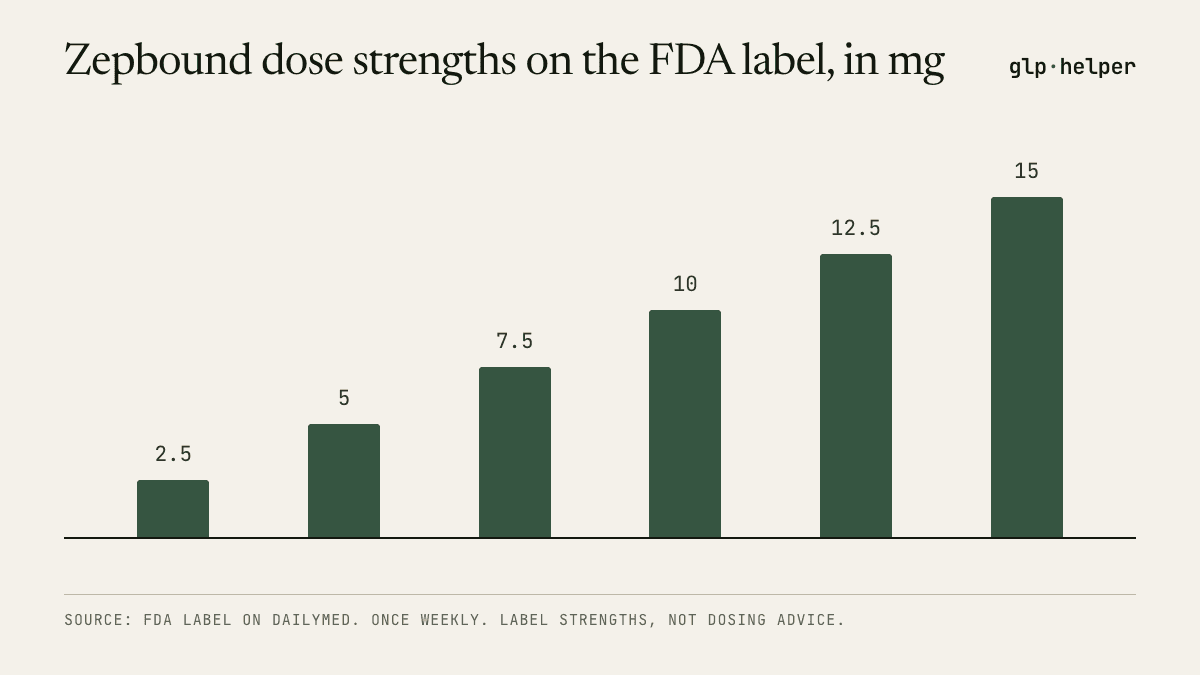
What the trials actually showed.
We summarize the SURMOUNT weight-management program. Figures are means at the 72-week primary endpoint, by dose.
Most Zepbound side effects are stomach and gut effects.
In Zepbound's weight trials at 5 to 15 mg, the most common side effects were nausea (25 to 29%), diarrhea (19 to 23%), constipation (11 to 17%), and vomiting (8 to 13%). Most reports came during dose escalation and decreased over time.[1] Serious events were rare but include pancreatitis, gallbladder disease, and an FDA boxed warning regarding thyroid C-cell tumors based on rodent data.[1]
What Zepbound costs, by how you pay.
The price you pay depends on your insurance plan, your diagnosis, and how you buy. Manufacturer self-pay programs cost far less than pharmacy retail. Here are the ranges.
Data sources: GoodRx national retail survey[6], CMS Part D formulary files[5], Eli Lilly self-pay and savings pages.
Self-pay and savings card prices checked . Retail averages from May 2026.
| Pharmacy retail (no insurance) | $1,000 to $1,300 | per month | Brand-name retail average, May 2026[6] |
|---|---|---|---|
| LillyDirect self-pay, KwikPen or vial | $299 to $699 | per month | KwikPen by dose: 2.5 mg $299, 5 mg $399, 7.5 mg $499, 10 to 15 mg $699. The $449 offer on 7.5 to 15 mg applies to the first purchase and to refills within 45 days. Vials start at $299 |
| Commercial insurance (weight) | Often denied | On-label for obesity but frequently requires prior authorization | |
| Medicare GLP-1 Bridge | $50 | per month | KwikPen only, Jul 1, 2026 to Dec 31, 2027, Part D enrollees who meet weight and health criteria[5] |
| Manufacturer savings card | as low as $25 | per month | Commercial insurance with coverage only; eligibility limits apply |
Physicians from the federal NPI registry. Ask each office whether it prescribes Zepbound.
Physicians from the federal NPI registry in the states we cover. Ask each office whether it prescribes Zepbound.
The questions people ask before they book.
Answers reviewed by the glp·helper Medical Team. Citations link to primary sources, never marketing copy.
Zepbound and Mounjaro are both tirzepatide, made by Eli Lilly, but they carry different FDA-approved indications. Zepbound is approved for chronic weight management; Mounjaro is approved for type 2 diabetes. Insurers treat them as separate products, and weight-loss coverage is far more restricted than diabetes coverage.[1]
In SURMOUNT-1, adults with obesity lost a mean of 20.9% of body weight over 72 weeks on the 15 mg dose, versus 3.1% on placebo. Individual results vary with dose, adherence, diet, and activity, and the figures are trial means rather than guarantees.[2]
Yes. Zepbound is a prescription-only medicine, marked Rx only on its label. A licensed prescriber (MD, DO, NP, or PA) must evaluate you before issuing a prescription.[1]
Coverage for weight loss is inconsistent. Zepbound is on-label for obesity, but most commercial plans require prior authorization and many deny it; Medicare Part D does not cover weight-loss medications by law. From July 1, 2026 to December 31, 2027, the Medicare GLP-1 Bridge, a CMS program that runs outside Part D, offers the Zepbound KwikPen for a $50 monthly copay to Part D enrollees who meet its weight and health criteria. Eli Lilly offers lower-cost self-pay vials for some doses.[5]
In most states, yes. Telehealth prescribing is permitted once a practitioner-patient relationship is established, typically via a synchronous video visit, by a provider licensed in your state.[1]